A guest article by Barbara Küchler
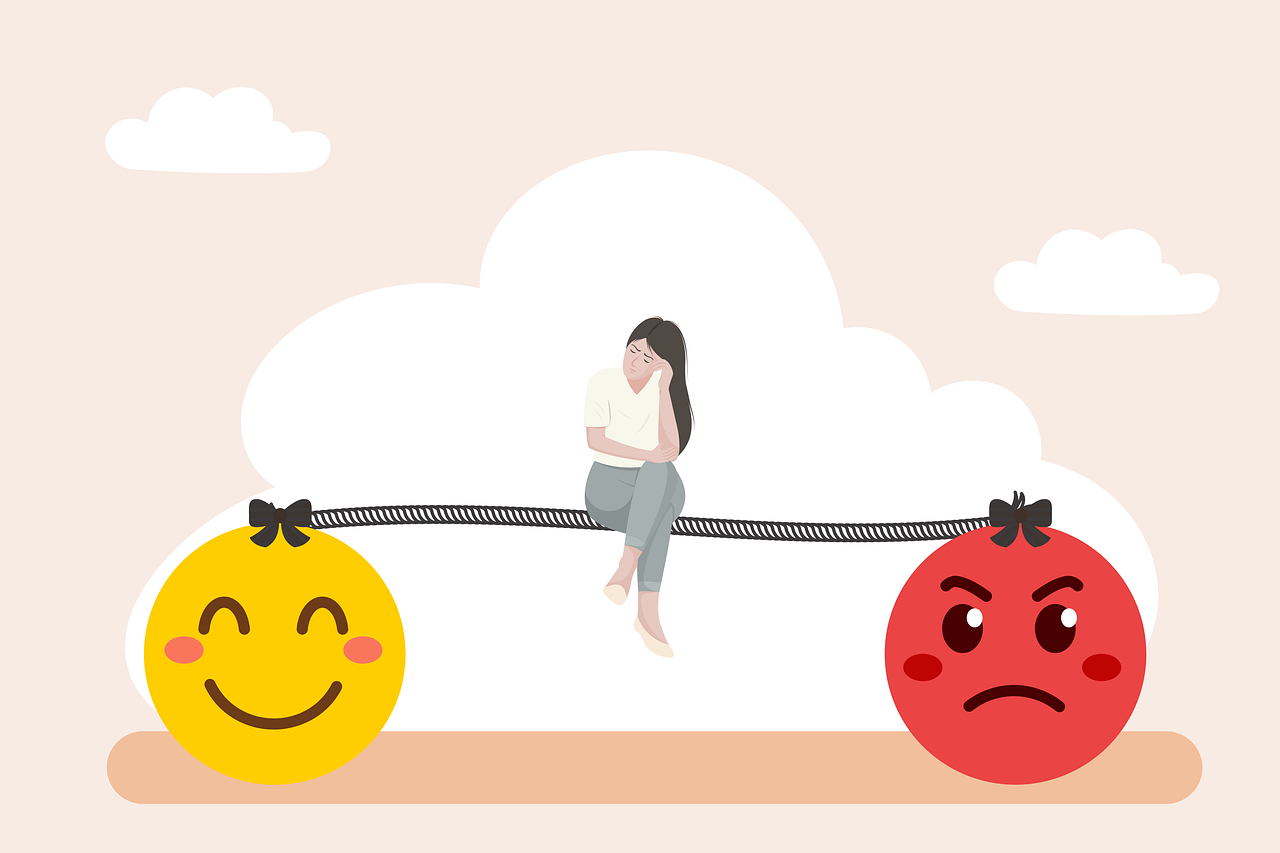
Conflicts are a wonderful opportunity to perceive ourselves and other people more or less simultaneously at different stages of development.
In my first article, I would like to give an overview of the influence of the different developmental stages on conflict behavior and at the same time provide an insight into the resulting dynamics.
Two remarks in advance: We can either calm or stir up conflict (see Klaus Eidenschink). Calming down is not better than stirring up, because conflicts are essential as drivers of change. It is therefore not a question of avoiding conflicts, but of dealing with them constructively.
The 1st stage of development unconsciously influences our relationship and communication behavior at every moment. Our innate personality (extroverted versus introverted, reserved versus temperamental, etc.) has an influence, as does our attachment style (secure, clinging/ambivalent, avoidant, insecure). For example, the conflict dynamics between two “clingers” will be very different to those between “clinging and avoiding” – regardless of the content of the conflict.
The 2nd stage of development also has a major influence on the way we interact with other people. We continue to reproduce what we experienced in our earliest childhood at the relationship level throughout our lives, until we start to question whether this is really the most sensible way to form relationships. For example, someone who learned as a child that you have to make a lot of noise to be noticed will reproduce this pattern just as automatically as someone who has learned that being sweet, nice and cheerful is the best way to get attention. Each person imposes their patterns on others and this very often becomes a source of destructive conflict.
In stage 3, we have all learned to assert our interests. We use a huge range of patterns to do this, from countless forms of manipulation to non-verbal and verbal psychological violence and even physical violence.
These power patterns are often very easy to recognize in children. As adults, however, we have learned to camouflage these “machinations” so well that we often don’t even notice them ourselves. Probably all people slip into this third stage from time to time in the context of conflicts because it gives us an incredible amount of power. This level beats all others in terms of power with its fomenting behavior.
In stage 4, we want to be good people and, as good people, we have no conflicts. However, tensions also arise in abundance at this stage, and these tensions have to go somewhere.
This stage is characterized by shifting conflicts (e.g. to an external enemy or a scapegoat) or dealing with them coldly via double binds. Double binds (what is said does not match what is meant) are communicative messages that are difficult to bear and can paralyze an entire system.
In stage 5, the aim is to take an objective, fact-based view of things. Arguments are therefore presented objectively. The best arguments should win. This is another very powerful stage that fuels conflict. If several people with level 5 communication discuss with each other, a conflict can escalate quickly. With its fomenting communication, level 5 also easily succeeds in overriding the subsequent levels 6 and 7.
Level 6 strives to integrate different points of view. It has a very calming and integrating effect with different communication patterns. As long as the majority of people involved in the conversation are part of this communication culture, a sporadic provocative contribution from level 5 is experienced as meaningful and invigorating. However, if mutual understanding and provocative righting are very one-sidedly distributed, it becomes increasingly frustrating for the “understanders” because they have no chance of winning with their pattern.
Stage 7 focuses on deeper interpersonal contact. This stage can help us to recognize our early attachment and relationship problems and support each other in the healing process. However, this presupposes that everyone involved can engage with this stage in a relatively stable way. All previous communication and relationship patterns have an irritating or even disruptive effect.
From the perspective of level 8, we can recognize that each of these levels has advantages and disadvantages, and we can learn to use the different levels reciprocally so that conflicts become a constructive process.
So much for the overview. In further articles, I will go into more detail about the individual stages and possible sensible reactions. You will find references to these articles in the upcoming newsletters.

About Barbara Küchler
Barbara Küchler is a committed Swiss organizational developer, coach and author. She accompanies people, teams and companies on their development path with a lot of heart and intuition. Her focus is on individual and organizational level development. She considers her “resonance body” to be her most important working tool. Through clever impulses and deep trust in the potential of each individual, she helps to discover new perspectives and create sustainable change.
In her latest book “Weil es so nicht weiter geht”, she describes the individual development from level 3 to level 8 in detail and comprehensibly, including many exercises.
Website: Understanding/promoting the development of people and organizations