A guest article by Barbara Küchler
The first stage of development (baby) unconsciously influences our relationship and communication behavior – on the one hand through our attachment style and on the other through our innate and early personality. In this article, I will first look at the attachment style.
Attachment refers to the emotional relationship between a child and its first caregivers (usually the parents), which offers the child security, comfort and protection. These first relationships shape our later interpersonal relationships and influence our social and emotional development.
Those who feel securely attached can deal well with closeness and distance in conflict. Securely attached people remain calm, even when opinions and intentions differ widely. I hardly know any people who are securely attached “by nature” – but I know from personal experience that you can develop this state.
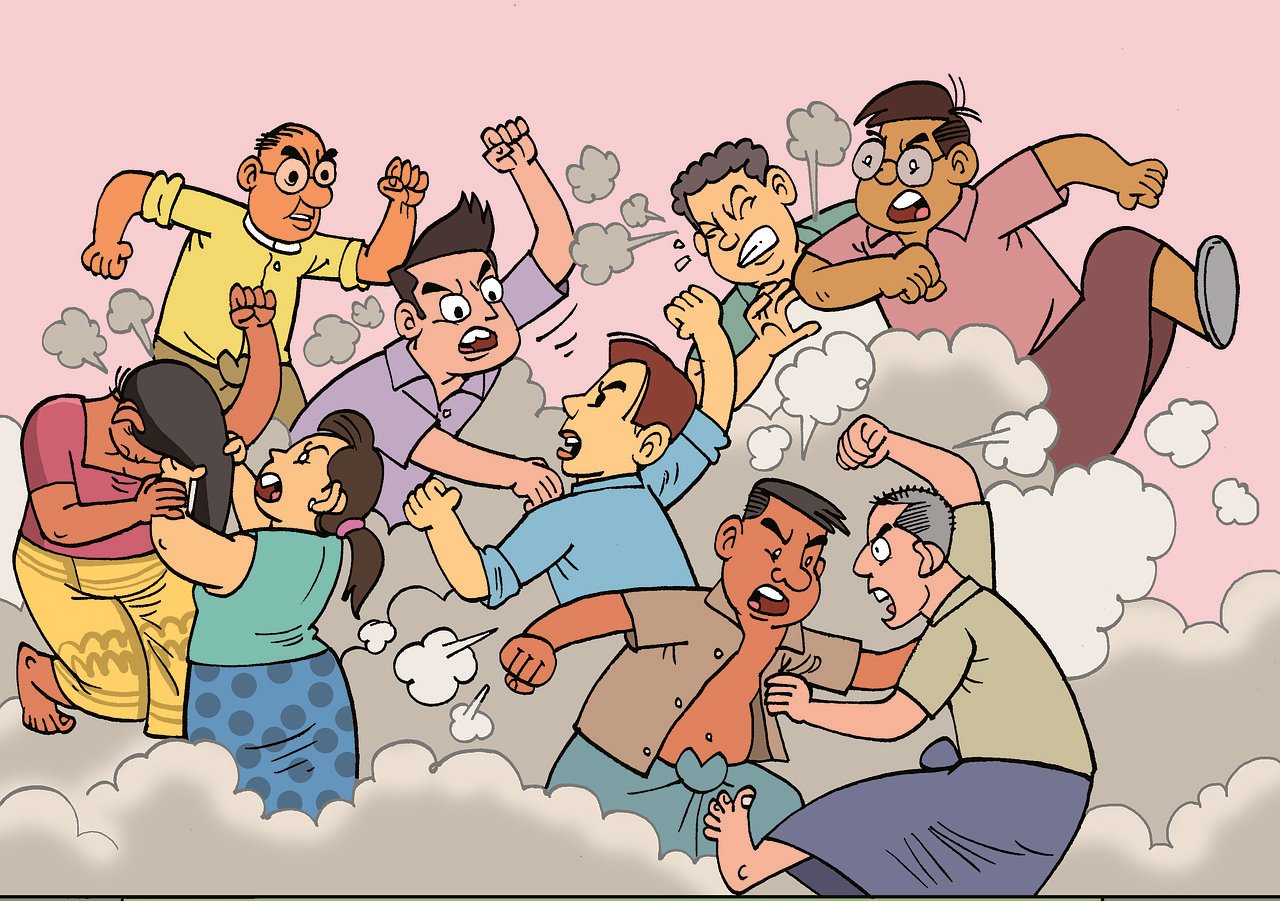
The avoidant (also known as insecure-avoidant) and clinging (also known as insecure-ambivalent) attachment styles are particularly important for behavior in conflicts.
Clingers want to maintain the relationship at all costs. Their basic behavior in conflict is often appeasing.
Avoidants, on the other hand, primarily want to preserve their autonomy. The easiest way for them to achieve this is through conflict-aggravating behavior. Complementary patterns often come together in relationships, which leads to stable conflict patterns that hardly change. Clinging people never find peace, while avoidant people often retain the upper hand.
The following table illustrates these complementary dynamics in detail:
–
Clinging
Avoiding
Focus
The focus is entirely on the other person. Subtle emotions, potential expectations and positive and negative feedback are perceived.
The focus is primarily on themselves. Personal fears of loss, potential attacks and insecurity are quickly perceived here.
Criticism
Tendency to self-criticism. People want to please others at all costs and often criticize themselves in anticipatory obedience. Toxic feelings of guilt arise.
The cause of problems is usually sought in others.
Reciprocity
Great need to be there for others, to provide, help and support.
Entitlement attitude: “I deserve to be looked after.”
Conflict behavior
Soothing, calming, quickly asks for forgiveness to end the conflict quickly.
Conflict-aggravating, often aggressive, demanding and delimiting.
Aggression
Hidden forms of aggression; when it becomes too much, it breaks out unintentionally, leading to feelings of guilt.
Open aggression and demarcation.
Contacts
Popular, many contacts.
More of a loner.
Construction of reality
In the context of conflicts, quickly doubts whether their own perception is correct.
Stubbornly holds on to its own reality.
What can you do with this information now?
The first step is to observe your own patterns – curiously, non-judgementally and without intent. This observational approach is reminiscent of an ethnologist observing a foreign people. What patterns do you perceive in yourself? Is your attachment style the same in all contexts or does it change depending on the situation (which is the case for many people)? And does it happen that you suddenly switch – for example after a long, frustrating argument in which you have no ground under your feet and then abruptly change your attachment style?
The second step is to think about alternatives – what are the consequences of your behavior and possible alternatives? Most people in conflict want the other person to change, but this rarely happens. The second best solution is to think about changing your own patterns. This sounds easier than it is, because changing patterns usually brings us into contact with deep, inner fears. The observer mindset also helps us here. If we manage to observe these early childhood fears, something within us relaxes. Compassion for these early inner parts often develops. We can talk to these parts as if they were a small child. I like to take my anxious side by the hand virtually and show understanding for the fear. I tell my little Barbara that I am taking her by the hand and that she can hide behind my back.
As soon as I acknowledge my fear instead of being it, it can no longer dominate me. Now I am free to step out of the existing, stable conflict pattern – for example, by consciously choosing to fuel the conflict instead of always appeasing and calming it down – or vice versa.
You can find out more about observing inner processes in my new book “Weil es so nicht weitergeht”.

About Barbara Küchler
Barbara Küchler is a committed Swiss organizational developer, coach and author. She accompanies people, teams and companies on their development path with a lot of heart and intuition. Her focus is on individual and organizational level development. She considers her “resonance body” to be her most important working tool. Through clever impulses and deep trust in the potential of each individual, she helps to discover new perspectives and create sustainable change.
In her latest book “Weil es so nicht weiter geht”, she describes the individual development from level 3 to level 8 in detail and comprehensibly, including many exercises.
Website: Understanding/promoting the development of people and organizations